
Palolo worms - A Pacific delicacy
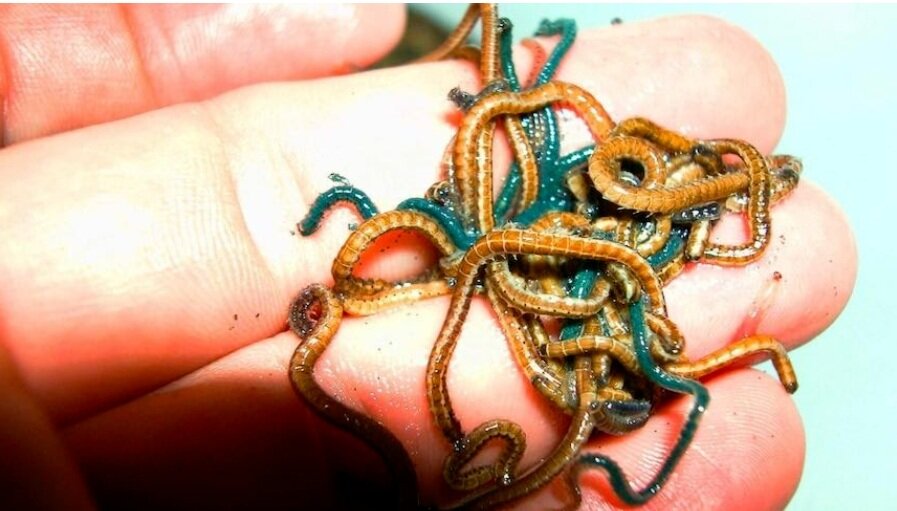
Figure 1. Palolo worms (Image Credit: ABC News)
What are palolo worms?
Palolo worms (Palola viridis) are a Polychaeta (bristle marine worms) that lives in crevices, cavities and coral rubble in coral reefs. It is found in the waters of the tropical regions throughout the Pacific Islands, including Samoa, Fiji, Tonga, Vanuatu, and parts of Asia in the islands of Indonesia and the Philippines.
The palolo worm has a unique breeding behaviour and is observed to breed at least twice a year at almost the same time annually following a particular phase of the Moon. During the breeding season, the worms break in half; the tail section (epitoke) carries the reproductive cells, while the head section (atoke) remains in the crevice or cavities of the coral. The tail section contains sacs of eggs and sperm, which swim to the surface in the thousands where they are released into the water column. These ‘tails’ containing the reproductive cells, swarm the surface of the sea in masses of long, wriggly strands, often mistakenly called worms. Palolo worms grow up to 40 cm long and have segmented bodies. The males exhibit reddish brown coloration, while the females are bluish green.
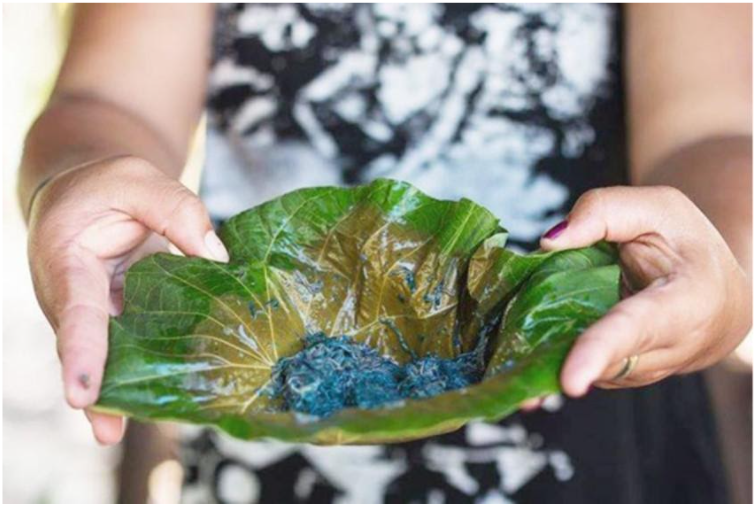
Figure 2. Palolo worms wrapped in leaves (Image Credit: CoconutTV)
Cultural use of palolo worms
Local communities in some Pacific island nations revere palolo worms as a delicacy since it is only harvested about twice annually. In preparation for the harvest, cultural and traditional activities are done to welcome the harvesting event. For example, in Samoa where palolo worms are highly revered, the harvest season is a momentous time and celebrated throughout the communities where it is been harvested. The harvest would then be shared with communities where the spawning has not occurred.
Every community where palolo worms are harvested have their unique preparation methods. In Samoa, large quantities are eaten raw, while some are wrapped in leaves and grilled over the fire or in stone ovens. In parts of Fiji, Samoa, and Papua New Guinea, palolo worms are wrapped in leaves (taro, chestnut, or young palm leaves) and grilled over the fire or cooked in coconut cream or fried. Palolo worms are often served with local vegetables including taro, yams, sweet potatoes or simply eaten as a snack.
Future of palolo worms
Recent findings show that palolo worms will possibly become extinct as the result of the current local and global stressors affecting coral reefs and marine ecosystems. This species is currently listed in IUCN Red-List as a threatened species, however, there is limited data available to better understand the species. With more research undertaken through social and biological surveys, the palolo worm can be protected and continue to thrive as a delicacy in the Pacific region where it exists.
For further reading
https://www.sprep.org/news/palolo-under-microscope-pacific-ocean-pacific-climate-conference
https://en.wikipedia.org/wiki/Palola_viridis
https://www.britannica.com/animal/palolo-worm
Spring, A. H. O. Samilolo (sami= sea water; lolo—fatty or oily). Pa is the name for fish hooks, and also for tro'ling lures shaped traditionally from selected shells, often with tails of.