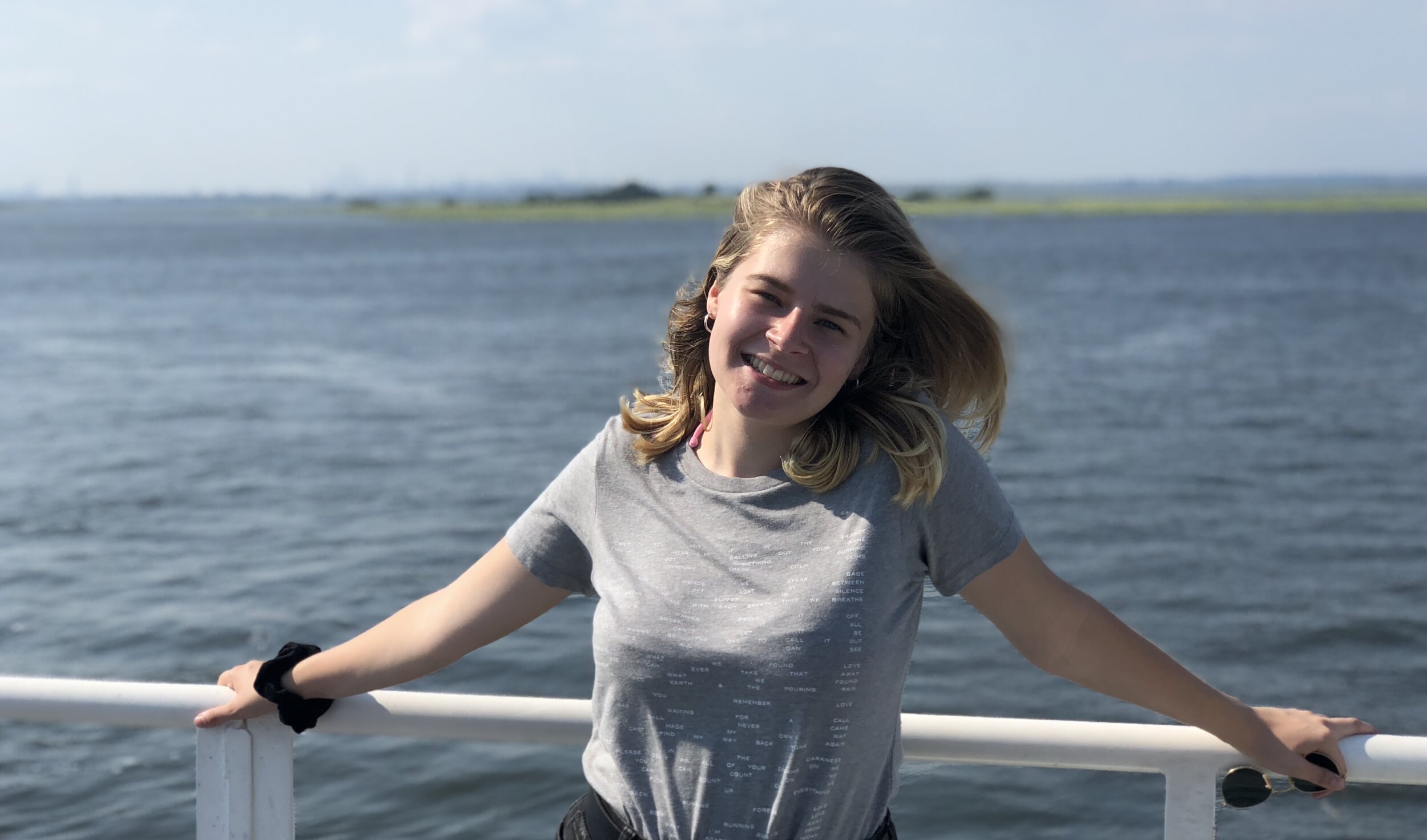
Michelle Sanders

Degree: Bachelor of Arts in socio-cultural Anthropology, New York University & Beginning Fall of 2020: Master of Science in Biodiversity, Conservation, and Management at University of Oxford.
Current job: Freelance documentary film, focusing on environmental & wildlife storytelling. Most recently have worked with Reef Life Foundation & the Turtle Conservancy (though most work is on hold due to COVID).
Current country of residence: United States
Questions for Michelle
What do you love most about the ocean?
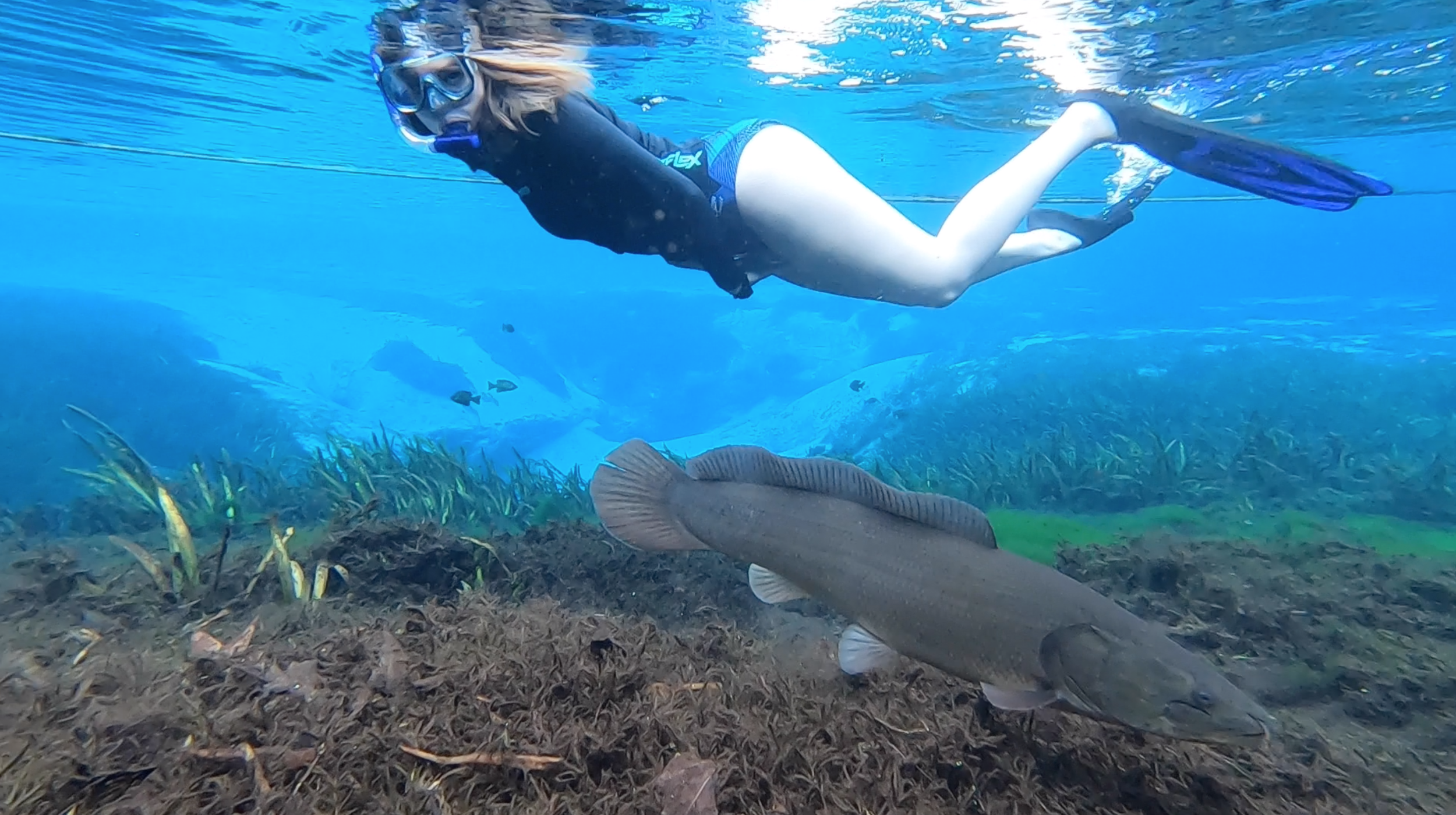
At the end of the day it’s visceral for me -- I just love the freedom of being in the ocean, the way our bodies move through water. It’s amazing to be able to experience the beautiful life that exists below the surface.
Why do you think ocean conservation is important?
My background is in anthropology, so I’m particularly interested in how humans relate to the ocean and why it’s so important to us. I still have a lot to learn, but it’s clear to me that conserving the ocean is not only a biodiversity and climate issue, but also a social justice issue. Beyond that, it’s a source of joy, happiness, and discovery.
What concerns you most about the future of your oceans?
In the most immediate terms, I’m concerned about the future of coral reefs. I think if there were anything to catalyze people to act with expediency on climate change, it would be to look at the rapidly changing situation of coral reefs worldwide. Not only is it a tragedy from the biological/ecological perspective, but humanistically too-- many millions of people directly depend on reefs for their survival through coastal protection, food, income, and more. Losing shallow water reefs is a human rights issue.
Who inspires you in the field of ocean conservation?
I’m really inspired by my peers in ocean conservation. I think many up and coming ocean conservationists want to work in a collaborative rather than competitive model. Even the building of this platform is a testament to that! Connecting to others who love the ocean is a great source of joy for me. In terms of established conservationists, I admire the work of Dr. Diva Amon, a deep sea biologist, Farah Obaidullah, a career activist, and Dr. Ayana Omilade Flewellen, an underwater archaeologist.
What would you recommend your 16-year-old self, that is passionate about ocean conservation?
I think I would just remind myself that there’s no barometer for caring “enough” about the ocean. I was never particularly interested in taxonomy or quantitative data (though I’m so impressed by those that are!) so I thought I didn’t “fit” into the field. I’ve learned that we need a diverse range of perspectives, people, and wisdom in order to conserve the ocean. So I would say learn what your strengths are and then put it to use to help the ocean!
One thing you do daily or weekly to be more sustainable?
I’m generally trying to shift my shopping patterns from mass-production companies to small business owners. They tend to be more sustainable, and you know more directly where your money is going.
What is your …
Favorite Documentary: I couldn’t possibly pick one! But in terms of nature-related films, “When Lambs Become Lions” is stunning & poignant. Also there’s a really fun doc called “The Love Bugs” which I absolutely adore.
Favorite Podcast: “On Being” - It really centers me when things feel overwhelming
Favorite Book: “Braiding Sweetgrass” - by Dr. Robin Wall Kimmerer. Such a beautiful & important
read.
Favorite Sustainable Product: honestly you know what I’d say… the practice of tailoring! It gives your clothes another life when there are fixable holes, rips, etc. and it reduces unsustainable consumption which is a big issue in the fashion industry.
There is no barometer for caring “enough” about the ocean
As a kid I was always told to “find my passion” and then I’ll “never work a day in my life”. While I think some people do have a direct route to finding their passion, for me ocean conservation has been an undercurrent in my life that I only really recognized in hindsight. Since I was little my parents always had trouble getting me out of the water, whether it be in the local pool or our annual beach trip. But as I grew older, I never really considered conservation in the scope of career possibilities. My parents are both classical artists, so I pursued dance for some years before I realized I preferred it recreationally.
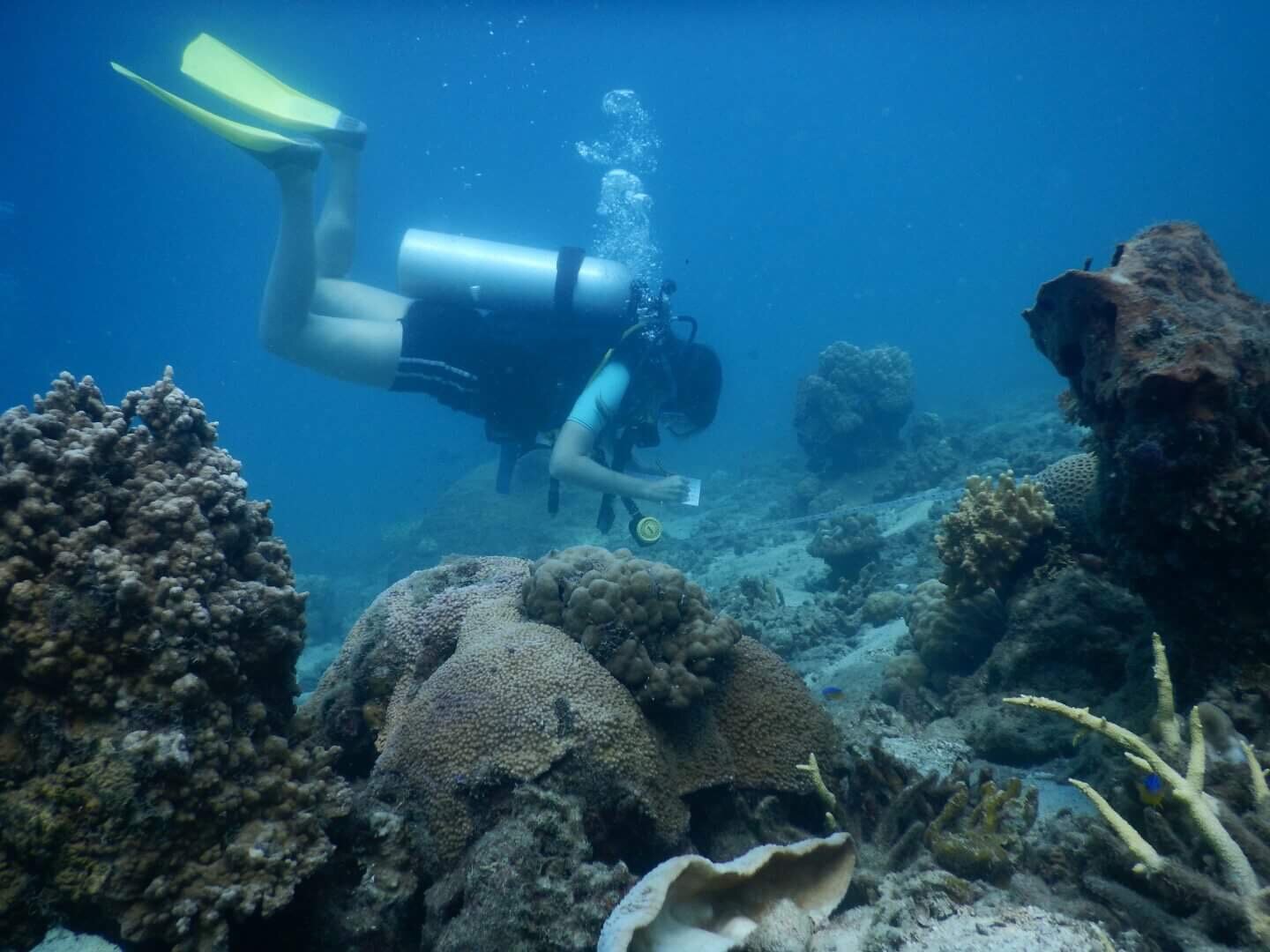
I came back to ocean conservation by chance when a friend invited me to join her on a coral project one summer during college. One thing led to another and it gradually became the path I followed. I always thought passion was pursuing something specific and tangible like perfecting the cello, training to be a professional runner, or being obsessed with a particular animal … but for me it boils down to the fact that I just love being submerged. So in many ways, my passion was more a rediscovery than a discovery.
I also realized that I have never abandoned one pursuit to follow another. All the things I’ve learned, in the different fields I have pursued, have helped structure the work that I’m doing and hope to do. The other side of that statement-- that once you find your passion you’ll “never work a day in your life”... personally, I think the phrase doesn’t quite meet the moment we’re in. Ocean conservation is often heartbreaking, frustrating, and upsetting. Reading reports of coral degradation, governments rolling back protections in marine parks, oil spills-- those parts are heavy and make some days feel like a lot of work. But I think instead we get to do a greater thing than “never working”-- we get to work with a distinct purpose. I’m amazed how resilient people are when they care about something, and I think that’s what I’d like to hear about more often.
The things you love may feel overwhelming at times, but they’re always worth it.
Photo Credit:
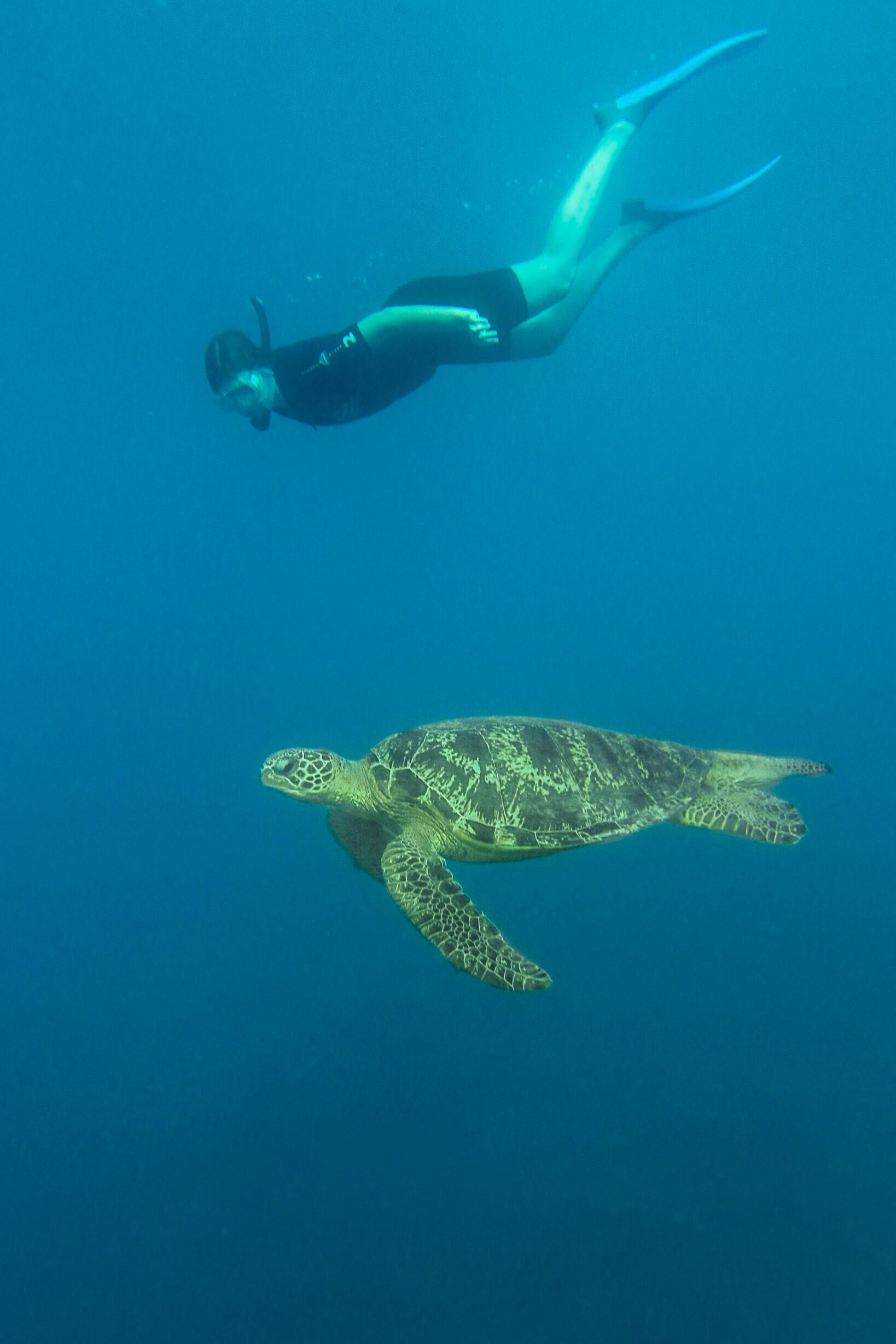
Photo of Michelle with the Sea turtle underwater - Ulla Lohmann