Tiffany Duong

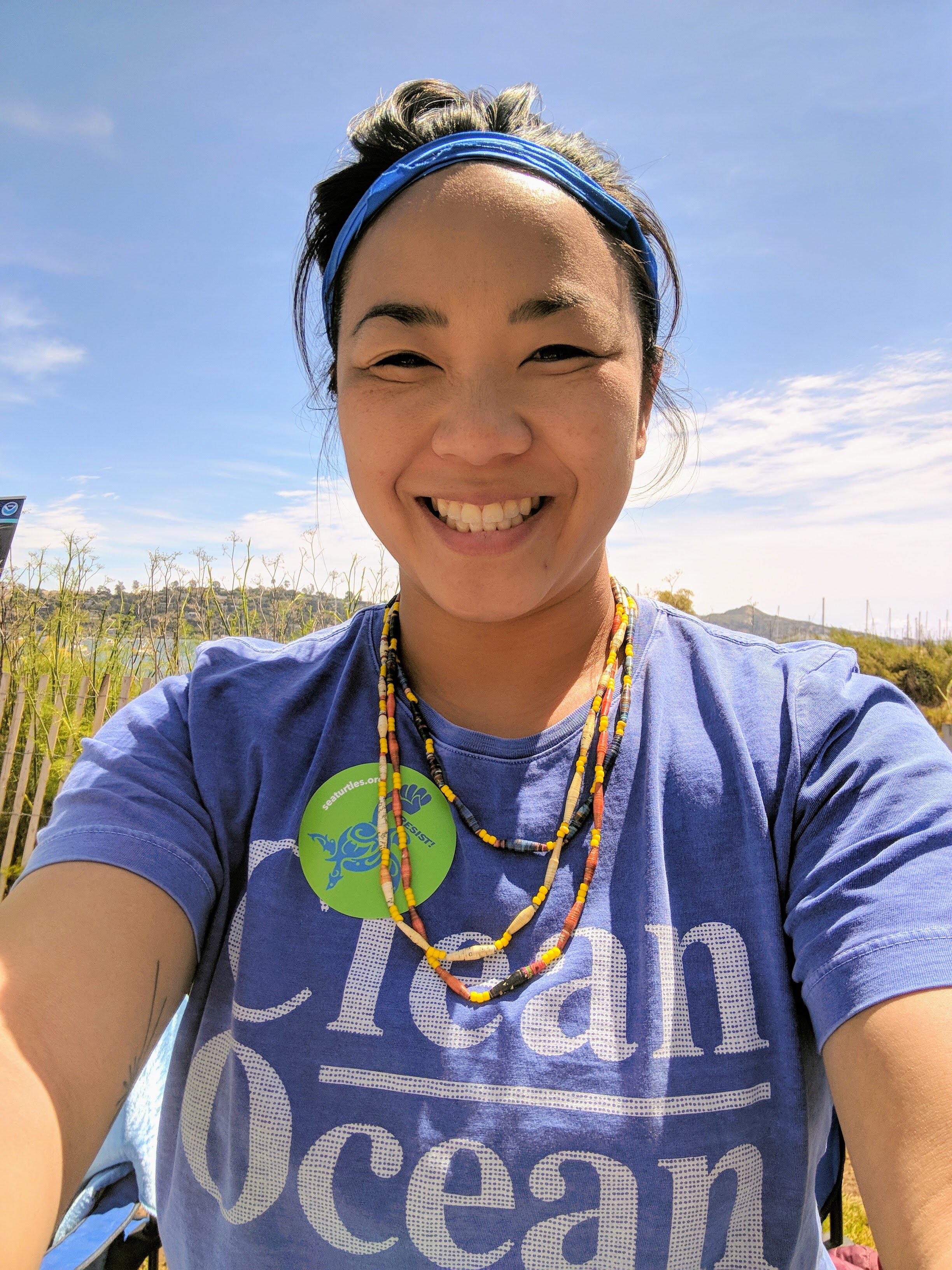
Degree: UCLA 2006, B.A. in International Development Studies and minor in Italian; University of Pennsylvania Law School 2010, J.D. focused on climate change, environmental, and refugee law
Current job: Field reporter and digital editor Keys Weekly Newspaper.
Freelance writer for EcoWatch, Scuba Diving Magazine, Alert Diver and other outlets.
Environmental advocate and climate educator at University of Miami Osher Lifelong Learning Institute and other locations with Ocean Rebels (my own initiative) and Al Gore’s Climate Reality Project.
Content creator for Parley for the Oceans to drive mass engagement with ocean conservation.
Editorial and strategic support for Investable Oceans (new platform for blue economy investing).
Expedition support and communications.
Current project: Lecturer at University of Miami Osher Lifelong Learning Institute about Climate and Oceans.
Expedition support for exploratory conservation mission to Mozambique.
Current country or residence: From Milpitas, CA (Bay Area). Living in Tavernier, FL (Florida Keys).
Questions for Tiffany
How did you get into the field of ocean conservation?
It definitely was not a traditional route through marine biology.
When I was a renewable energy lawyer, I used to scuba dive as a distraction from my stressful work. In 2015, an epic scuba diving trip to the Galapagos (my first live-aboard, my first time diving outside of California, etc.) catalyzed me to quit my job, sell my house, and start campaigning for the planet. I moved to South America to rest and reboot and the Amazon Rainforest to try field work. I realized that the ocean was calling me. I felt like it had saved me on that Galapagos trip, and now I felt a duty to join the fight to save it. I came back to the United States, applied to become an ocean conservation intern, and have worked in many capacities in ocean conservation and advocacy ever since.
What do you enjoy most about conservation?
Conservation is firmly grounded in the audacity of hope. In my years of fighting to save our planet’s wild places and amplifying the efforts of others, not one single practitioner I’ve come across has ever said it was too late. I love this.
Despite daunting challenges and seemingly unsurmountable odds, those who engage in this battle never lose sight of the fact that we’re fighting for a better future. There is an unspoken pact not to give up or else we all lose.
This energy is infectious, inspiring and important. It keeps me focused and motivated. I truly believe that it will save the planet because it galvanizes each and every person it touches to do as much as they can, wherever they can, as often as they can to make a difference. With that much collective love and passion en masse, we cannot fail.
What do you believe is the most difficult thing about conservation?
Demonstrating its relevance. It is hard to convince others to protect something they don’t understand or care about. John Armor, the director of the Office of the National Marine Sanctuaries, noted this as one of the two biggest challenges that the U.S.’ sanctuaries face, because not all segments served by those waters recognize or appreciate their importance. I would argue that this is actually one of the biggest pitfalls that conservationists and environmentalists face in any field. We can’t just tell people why the environment matters and why they should save it; we need to help them find their own way to connect to these places, to understand why our oceans are the fountain of life, why we must stop using fossil fuels, and why the world’s forests must remain intact. This cannot just be lectured; rather, it must somehow be communicated and imparted so that the majority of people take on the cause as their own. Only then can we each operate beyond our own spheres of influence (recycling, using less plastic, eating less meat, carpooling, etc.) and instead amplify the work through voting, divestment, and conscious consumption. Only then can we start to tackle the huge global issues that link us together and threaten us all.
What concerns you most about the future of our oceans?
I work at the nexus of the oceans and climate. My biggest fear is that we will strip the oceans dry of all the richness that makes them the most beautiful place on earth. Overfishing and habitat destruction can leave that vast blue devoid of all the life that makes the oceans special.
If we manage not to over-consume and destroy the oceans, I am also terrified that the climate crisis will get even further out of hand, so much so that we will completely max out and destroy the oceans. That we will make them so warm and so acidic from so much carbon dioxide and heat in the atmosphere that much of the marine life and habitats that we know and love will die off, and we’ll be left with a vast, empty, dead environment.
Your most memorable moment of working in ocean conservation (positive or negative)?
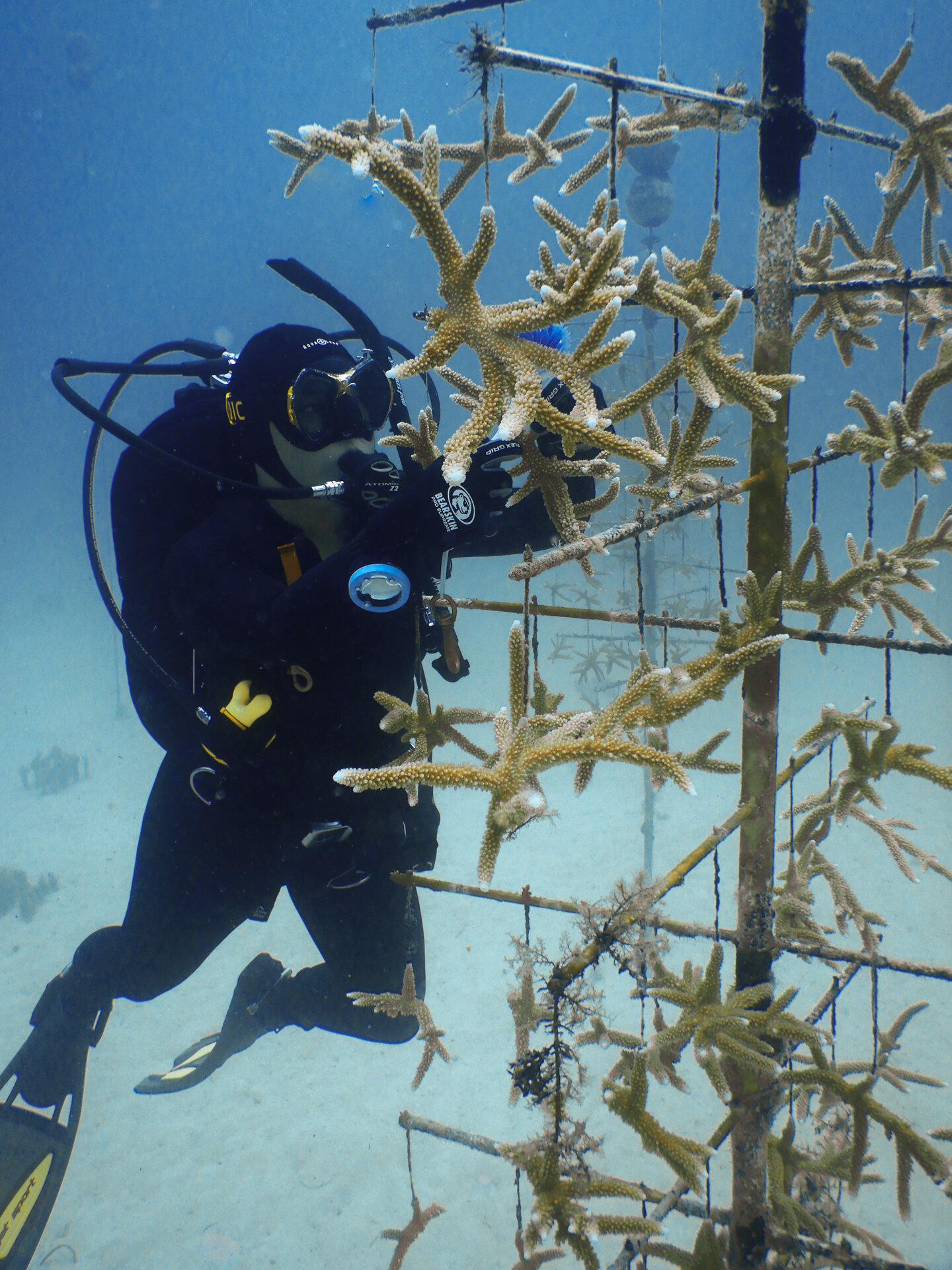
I was covering a coral spawning event at a coral restoration nursery in Key Largo for the local newspaper. This is an annual event that scientists are still learning about, and in this particular case, we were observing if corals grown in an underwater nursery would spawn or reproduce. Their spawning would be an indicator that the science works and that it could one day help restore degraded reefs through restoration work.
I was getting ready to board the boat at sunset with my dive and camera gear, and was interviewing scientists, restoration practitioners, and excited lay people. We’d already gone out the day prior but nothing spawned. When we dove down, we turned off all our lights so as not to shock the corals into not spawning. I’ll never forget that collective, eager hopefulness we all shared just waiting together at the bottom of the ocean under the full moon. Everyone looked just like a shadow in the night, but you could feel the excitement turn into palpable joy as the first corals began to spawn. Before we knew it, there were trickles all around the nursery, and everyone was doing happy dances underwater. This experience for me captured the power of conservation work and helped me understand what an honor it is to tell these stories to others to help them connect to our oceans.
One piece of advice you give people to become stewards of the ocean?
Ocean conservation can be a creative field. You don’t have to do the same thing as everyone else nor do you have to do it better to help. We all don’t need to create huge marine debris campaigns like 4Oceans. Start with what you care about, find how it connects to the oceans, and then find a way to improve even further in that arena. Follow what lights you up. Hint: everything, somehow connects to the oceans. For example, if you care about animal rights and you are vegetarian or vegan, that is actually already a really strong, positive action for the ocean. Eating less meat reduces individual greenhouse gas emissions a lot, which protects the oceans from too much warming and ocean acidification. You may already be acting as an ocean steward without knowing it. Once you learn about the connections, you can take it even further and help educate and challenge others to do more or talk to policy and lawmakers to encourage better regulations for our oceans. In this way, you can make ocean conservation part of your daily life, by connecting intentional decisions you make with the benefits they create for our oceans.
One thing you do daily or weekly to be more sustainable?
I try to only buy seafood when I can ask or find out how it was caught. So many commercial fishing methods are really destructive to the oceans. From fish farms that create pollution and use wild fish as feed to trawling for shrimp and bottom-dwelling fish to illegal overfishing, the majority of seafood available to us in our grocery stores and restaurants harms the oceans. I start with the Monterey Bay Aquarium Seafood Watch card as a very basic bottom-line, but educate myself further on what is truly sustainable, and try to only eat spearfished or single-line caught fish. Ideally, I like to purchase straight from fishermen or fish-houses that can guarantee how the fish were caught and did not result in massive amounts of bycatch or environmental destruction.
What is your …
Favorite Podcast: Lessons from a Quitter – aside from great tips to help you get out from a job/situation/life phase you’re unhappy in, Goli also shares incredible insight in how to shift your mindset, explore your passions, and manifest your dreams. Her tips help me to push my environmental advocacy and writing further.
Favorite Documentary: Amazon Gold – it forever changed me. I watched it sitting in the Amazon, a handful of miles from where illegal and destructive gold mining was laying the forest bare and polluting its rivers, which run to the sea. I had no idea the demand for gold was at all related to deforestation or water pollution nor that it was happening so close by. Since watching that movie, I’ve not bought gold and strive to spread awareness about gold’s dirty secret.
Favorite Book: Big Magic by Liz Gilbert. It’s about cultivating a creative life. For me, this book inspires me to continue writing about and advocating for our oceans to create the changes I want to see.
Favorite Sustainable Product: Silipint silicone drinkware. They come in amazing colors and patterns and are indestructible and dishwasher and oven safe. I use them daily as my drinking cups for hot and cold liquids from water and coffee to protein shakes and cocktails. I also take them to eat out, go to happy hour, go camping or on the road to replace single-use plastic cups offered to me. As an added bonus, many of the marine conservation organizations I love and support offer them, so I buy the branded cups and help support those conservation missions with my purchases.
Rebelling Against the Status Quo
The serendipitous way I came into ocean conservation, as a second career and a newfound passion in life, helped me create a life that truly excites me. The dive trip to the Galapagos that kickstarted my journey challenged me as a diver and a person. There were strong currents and difficult ocean conditions that taught me to let go of control and go with the ocean’s flow, literally. This lesson has served me well moving forward, and I’ve applied it to help hone-in on different ways to help our oceans.
Coming back from that trip, I knew I wanted a life crusading for our planet. I needed to feel alive as I had on the bow of that boat in the middle of the sea, but I had no idea where to begin. I decided to follow that spark of intuition and try out field work. That led me to the Amazon Rainforest, where I worked at a biodiversity research camp deep in the jungle. That volunteer experience showed me I that didn’t want to go back to school for marine biology or ecology and instead wanted to be on the ground with scientists and doing the work with my own hands. My time in the rainforest also reaffirmed for me that the oceans are where I really want to leave my legacy.
I returned to the U.S. and began searching in earnest for ways to help. Despite feeling “too old,” I applied to become an intern at 33-years-old at Turtle Island Restoration Network (TIRN). The job posting listed my primary duties-to-be as running a statewide boycott campaign against unsustainable swordfish fisheries. It scared me and excited me, so I knew I had to do it. I learned so much about how to build coalitions for the ocean, how to communicate with stakeholders, and how to create media campaigns to galvanize public interest in the oceans. We lobbied for regulation changes to get destructive drift gillnets out of California’s waters, a 40-year fight that culminated successfully with our efforts.
After a year with TIRN, I decided to try ocean fieldwork by moving to the Florida Keys to restore the coral reefs. Now one year older, I found myself surrounded by 20-something fellow interns who had, for the most part, taken the traditional path into marine biology. I felt like an outsider, and an old one. But my supervisor at Coral Restoration Foundation helped me understand why I was there. We’re all called to fulfill our Ikigai, he told me. It’s an ancient Japanese concept describing your life purpose. We are most in line with our legacies when we can occupy the space between our passion, what we’re good at, what we can get paid for, and what the world needs. I realized that my brand of ocean conservation didn’t have to look like everyone else’s, nor should it. I came to this work with very different skills and experiences that I should leverage instead of just put aside.
I began thinking about how I could help the oceans in a more creative, go-with-the-flow way. Rather than trying to act like a young marine biologist, I could instead help them learn new skills in civic engagement, advocacy, and education while deepening my expertise. I could reapply my training in logic and research to bring awareness to critical ocean issues like coral reef loss, climate change, and overfishing. And, I could follow new inspirations that struck me.
I began teaching classes at the University of Miami Osher Lifelong Learning Institute, an effort that I continue to this day. My curriculum reinforces the strong bond between the oceans and the climate and discusses the science, seriousness, and solutions to the problems before us.
I documented a groundbreaking effort in the Florida Keys to save the last corals from a mystery disease, and in that effort, learned just how cutting edge and exciting ocean conservation science can be. When the outcome of those efforts did not result in the product I had hoped for, rather than remaining discouraged, I refocused my advocacy efforts on what I know best and love doing: diving and writing.
I began reporting for our local newspaper on critical environmental issues. By chance, I met the local editor at a lionfish tasting and began writing stories about the sea. I have never felt as alive or aligned as I do when I am doing this work. Each person I meet in the ocean conservation space inspires me and keeps me motivated to continue learning and helping.
It’s been an incredible ride moving my career towards ocean conservation and creating a life centered around it. I feel grateful everyday to have such a strong connection to the oceans. It gives me purpose and a reason for being. And, I continue to advocate for, tell stories about, and rebel against the status quo to benefit our oceans.


-(1)_rmfj6fqubk5vbfa47j5stn.jpg)
-(1)_nudff5fdhxowqxe3byj57i.jpg)
_w034fpkbweqkwtdpdtsxz2.jpg)
_o7veeqadgkaz4e2my7tnrd.jpg)


_jqsjhzd82rn4t680drv048.jpg)
_reabim2bjoqx2wwqoziv0u.jpg)
_643xm3pzoj45umxfnb34hv.jpg)
_2mcqf5dyvb70w8nzavaeuu.jpg)